mirro pressure cooker instruction manual

Mirro Pressure Cookers boast a rich history, offering both cooking and canning capabilities; finding the correct instruction manual is crucial for safe and effective operation.
Older manuals may contain outdated, potentially unsafe guidance, especially concerning processing times and recipes, rendering them less useful for modern models.
Resources like Yahoo Groups provide archived manuals, while Appliance Factory Parts offers current documentation for specific Mirro models, ensuring user safety.
What is a Mirro Pressure Cooker?
Mirro Pressure Cookers are versatile kitchen appliances designed for both rapid cooking and safe home canning.
They utilize sealed, pressurized environments to elevate boiling points, drastically reducing cooking times for various foods.
These cookers, detailed in their instruction manuals, come in diverse models, each with specific features and safety protocols.
Understanding your cooker’s capabilities, as outlined in the manual, is vital for optimal performance and preventing accidents.
History and Evolution of Mirro Cookers
Mirro has a long-standing reputation in pressure cooking and canning, evolving over decades to meet changing culinary needs.
Early instruction manuals focused on basic pressure cooking techniques, while later editions incorporated canning instructions.
Modern Mirro cookers feature updated safety mechanisms and designs, necessitating revised manuals.
The evolution reflects advancements in materials and a growing emphasis on user safety, detailed in current documentation.
Understanding Your Mirro Pressure Cooker Model
Identifying your specific Mirro model number, often found on the base, is vital for accessing the correct instruction manual and ensuring proper, safe operation.
Identifying Your Specific Model Number
Locating your Mirro pressure cooker’s model number is the first step towards accessing the correct instruction manual and parts lists. This number is typically stamped or affixed to the bottom or back of the cooker itself.
Knowing this number allows you to download the precise manual from Appliance Factory Parts or find relevant information within the Yahoo Groups archive, ensuring safe and effective use.
Key Components and Their Functions
Mirro pressure cookers feature essential components like the lid, sealing ring, pressure regulator (weight or valve), and safety features. The lid ensures a sealed environment, while the sealing ring maintains pressure.
Understanding the pressure regulator’s role in controlling internal pressure, and familiarizing yourself with safety mechanisms, is vital for safe operation, as detailed in your instruction manual.

Safety First: Important Precautions
Before use, thoroughly read the instruction manual. Never attempt to pressure fry with oil, and always follow guidelines to prevent burns and potential injuries.
Reading the Manual Before Use
Prior to operating your Mirro pressure cooker, carefully and completely read the provided instruction manual. Understanding all directions is paramount for safe operation and preventing accidents.
Incorrect usage can lead to serious burns or other injuries; the manual details essential safety precautions and proper techniques for both pressure cooking and canning.
Familiarize yourself with all components and their functions before first use.
Preventing Burns and Serious Injuries
Mirro pressure cooker instruction manuals emphasize avoiding contact with hot surfaces; always utilize handles or knobs. Never attempt to force the lid open while pressure remains inside the cooker.
Understand the pressure release methods – natural and quick – to prevent steam burns. Incorrect operation poses a significant risk of severe injury, so heed all warnings.
Proper use is vital for safety.
Operating Instructions: Pressure Cooking Mode
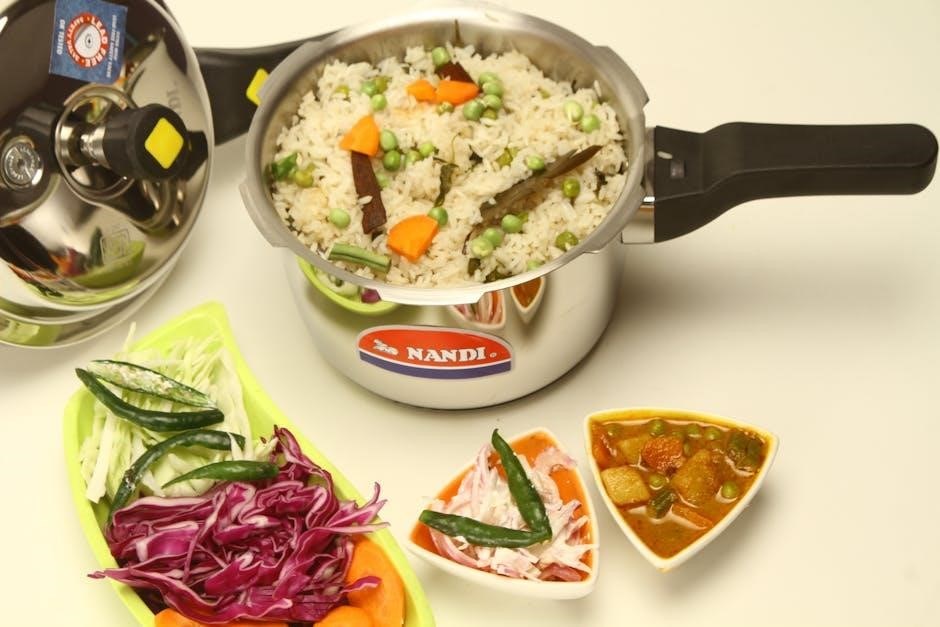
Mirro manuals detail adding food and liquid, securely sealing the cooker, and allowing pressure to build before setting appropriate cooking times and pressure levels.
Adding Food and Liquid
Mirro instruction manuals emphasize filling the cooker appropriately; generally, liquids should reach the minimum fill line, but never exceed the maximum fill mark, to prevent dangerous pressure buildup;
Solid foods expand during cooking, so adequate liquid ensures proper heat distribution and prevents scorching.
Always consult your specific model’s manual for precise liquid requirements based on the food being prepared, as these vary significantly.
Sealing the Cooker and Building Pressure
Mirro manuals detail a secure lid locking mechanism, crucial for pressure development; ensure the gasket is properly seated and the lid aligns correctly before locking it into place.
Heat the cooker on medium-high until steam visibly escapes, then reduce heat to maintain consistent pressure.
Refer to your manual for specific pressure levels and corresponding heat settings, as these vary by model and recipe.
Cooking Times and Pressure Levels
Mirro instruction manuals provide precise cooking times and pressure levels tailored to various foods; these are vital for safe and successful pressure cooking.
Times differ based on food quantity, altitude, and desired tenderness – always consult your manual’s charts.
Modern cookers often feature weighted gauges or digital displays indicating pressure, while older models rely on gauge readings.
Operating Instructions: Canning Mode
Mirro canning requires meticulous jar and lid preparation, alongside adherence to precise processing times detailed in your instruction manual for food safety.
Proper cooling and jar removal techniques, as outlined in the manual, are essential for successful preservation.
Preparing Jars and Lids
Mirro instruction manuals emphasize thoroughly washing jars in hot, soapy water, rinsing them well, and keeping them hot until filling; this prevents thermal shock.
New lids require simmering in hot water (do not boil) to soften the sealing compound, ensuring a proper vacuum seal during processing.
Inspect jars for chips or cracks, discarding any damaged ones, as they can compromise the canning process and food safety.
Processing Times for Different Foods
Mirro manuals detail specific processing times based on food type, jar size, and altitude; accurate timing is vital for safe canning.
Low-acid foods like vegetables and meats require higher temperatures and longer processing times than high-acid foods like fruits and pickles.
Always consult a current, reliable Mirro chart or updated USDA guidelines, as older times may be inaccurate and pose a food safety risk.
Cooling and Removing Jars
Mirro instruction manuals emphasize allowing the cooker to cool naturally before attempting to remove jars; forced cooling can cause seal failures or glass breakage.
Once cooled, carefully remove jars using a jar lifter, avoiding tilting which could disrupt the sealing process.
Inspect seals after 12-24 hours; jars that haven’t sealed must be refrigerated and consumed promptly or reprocessed with new lids.
Troubleshooting Common Issues
Mirro manuals address issues like failure to seal, pressure release problems, and food sticking; always consult your specific model’s guide for solutions.
Proper understanding of these issues ensures safe and efficient operation of your pressure cooker.
Cooker Won’t Seal
If your Mirro cooker fails to seal, ensure the gasket is correctly positioned and clean; inspect the rim for debris or damage.
Verify sufficient liquid is present, as inadequate liquid prevents proper pressure build-up.
Check the vent pipe and overpressure plug for obstructions; a faulty gasket often requires replacement, available through Appliance Factory Parts or online retailers.
Pressure Release Problems
Difficulty releasing pressure often stems from a blocked vent pipe; ensure it’s clear of food particles.
For quick release, carefully move the regulator to the vent position, avoiding direct contact with escaping steam.
If natural release is preferred, allow the cooker to cool undisturbed; persistent issues may indicate a faulty regulator needing replacement.
Food Burning or Sticking
Food burning frequently occurs with insufficient liquid; always adhere to minimum liquid requirements specified in recipes.
Ensure adequate stirring before sealing the cooker to prevent sticking, particularly with starchy foods.
Lowering the heat after pressure is reached can also help; a slightly longer cooking time is preferable to scorched results.
Cleaning and Maintenance
Proper washing after each use prevents residue buildup; avoid abrasive cleaners that could damage the cooker’s surface.
Store your Mirro cooker in a dry place, ensuring all components are completely dry to prevent corrosion.
Proper Washing Techniques
After each use, disassemble all removable parts – the lid, sealing ring, and steam vent – and wash them in warm, soapy water.
The cooker body can be washed similarly, but avoid abrasive cleaners or scouring pads, as these can damage the finish.
Ensure all parts are thoroughly rinsed and dried before reassembly and storage to prevent odors or corrosion.
Storage Recommendations
When storing your Mirro cooker, ensure all parts are completely dry to prevent mildew or rust.
Store the unit in a cool, dry place, away from direct sunlight and extreme temperatures.
Avoid stacking heavy items on top of the cooker, which could damage the lid or body; keep the manual accessible for future reference.
Understanding Pressure Release Methods
Mirro cookers utilize natural and quick release methods; understanding each is vital for safety and optimal cooking results, as detailed in the manual.
Natural Pressure Release
Natural Pressure Release (NPR) involves allowing the Mirro cooker to cool down and depressurize on its own, without intervention. This method is ideal for soups, stews, and foods with a high liquid content.
The manual emphasizes that NPR takes longer, often 10-30 minutes, but results in more tender food and prevents food from being forced up the steam vent.
Avoid rushing this process for optimal results.
Quick Pressure Release
Quick Pressure Release (QPR), as detailed in the Mirro manual, involves carefully releasing steam using the pressure regulator or vent. This is suitable for vegetables or foods where overcooking is a concern.
Exercise extreme caution to avoid burns from the escaping steam; always direct the steam away from your face and hands.
QPR is faster but can sometimes cause foaming.

Recipes for Mirro Pressure Cookers
Mirro manuals often include recipes like Beef Stew and Chicken and Rice, but always verify cooking times with updated guidelines for your specific model.
Beef Stew Recipe
Mirro manuals frequently feature classic Beef Stew recipes, adaptable to pressure cooking for faster results. Typically, these involve browning cubed beef, then pressure cooking with vegetables like carrots, potatoes, and onions in beef broth.
Always consult your specific Mirro model’s manual for precise cooking times, as they vary based on cooker type and altitude; generally, expect around 30-45 minutes under pressure.
Remember to follow safety guidelines for pressure release, either natural or quick, as detailed in your instruction manual.
Chicken and Rice Recipe
Mirro pressure cooker instruction manuals often include a simple Chicken and Rice recipe, perfect for a quick weeknight meal. This usually involves searing chicken pieces, then combining them with rice and broth within the cooker.
Cooking times depend on your Mirro model; refer to your manual for specific instructions, typically ranging from 20-25 minutes under pressure.
Ensure proper liquid ratios to prevent burning, and always prioritize safety precautions outlined in your manual during operation and pressure release.

Differences Between Older and Newer Models
Mirro pressure cooker instruction manuals reveal significant changes over time; older models have different usage directions and require recipe adjustments for modern cookers.
Consequently, outdated processing times and recipes found in older manuals are often inaccurate and potentially unsafe for newer Mirro units.
Changes in Usage Directions
Mirro pressure cooker instruction manuals demonstrate evolving safety standards and operational procedures. Older manuals often lacked detailed warnings about pressure frying with oil, a practice now strictly prohibited.
Modern manuals emphasize the importance of thoroughly reading all instructions before use, a critical step to prevent burns and serious injuries. Newer models may also feature updated sealing mechanisms and pressure regulation systems, necessitating revised operating procedures.
Recipe Adjustments for Modern Cookers
Mirro pressure cooker instruction manuals highlight that recipes from older manuals may be inaccurate for newer models. Processing times and cooking durations often require adjustment due to variations in heat distribution and pressure regulation.
Always consult current Mirro documentation or reliable sources for updated recipes, ensuring food safety and optimal results. Ignoring these adjustments could lead to undercooked or overprocessed food.
Finding Replacement Parts
Mirro pressure cooker instruction manuals often direct users to Appliance Factory Parts and various online retailers for genuine replacement components.
Maintaining your cooker’s functionality relies on sourcing correct parts, ensuring continued safe and efficient operation.
Appliance Factory Parts
Appliance Factory Parts serves as a dedicated resource for Mirro pressure cooker owners seeking authentic replacement components, including gaskets, seals, and valves.
They directly host Mirro owner’s manuals, like the 92122 model, offering convenient access to crucial instruction manual information alongside parts diagrams.
This platform streamlines the process of finding the correct parts, ensuring compatibility and maintaining the safety and functionality of your pressure cooker.
Online Retailers
Numerous online retailers carry Mirro pressure cooker parts and, occasionally, downloadable instruction manuals, though verifying manual accuracy is vital.
While not a primary source for official documentation, these platforms offer convenience for acquiring replacement components like seals and weights.
Always cross-reference part numbers and consult Appliance Factory Parts or manufacturer websites for the most reliable instruction manual access.
Resources and Further Information
Yahoo Groups Pressure Cooker Recipes Archive and official manufacturer websites provide valuable Mirro resources, including instruction manuals and support.
Yahoo Groups Pressure Cooker Recipes Archive
The Yahoo Groups Pressure Cooker Recipes Archive (link) is a valuable repository for older Mirro models’ instruction manuals.
Access often requires joining the group, but it offers a wealth of historical documentation, including the Mirro PressCookerManual2005.pdf, aiding in understanding vintage cooker operation and safety.
Manufacturer Websites
Appliance Factory Parts (link) hosts Mirro owners manuals as a courtesy, recognizing the difficulty in locating them elsewhere online.
These resources are specifically for older models, offering crucial guidance, but users should prioritize safety and carefully read all instructions before operating their pressure cooker/canner.