study guide romeo and juliet act 2

Romeo and Juliet Act 2: A Comprehensive Study Guide
This guide delves into the pivotal second act, exploring the blossoming romance amidst familial strife, and analyzing Shakespeare’s masterful use of language and dramatic techniques.
Overview of Act 2
Act 2 of Romeo and Juliet marks a significant shift in the play’s trajectory, transitioning from initial infatuation to a deeply committed, albeit secret, love affair. Immediately following the Capulet feast, Romeo and Juliet grapple with the immense obstacles presented by their families’ longstanding feud. The Chorus foreshadows the challenges they will face, yet emphasizes the power of their love to potentially overcome these barriers.
This act is notably characterized as the “happiest and least tragic” portion of the play, focusing intently on the joyous and romantic aspects of young love. Key scenes unfold, most famously the balcony scene, where Romeo and Juliet exchange vows and solidify their devotion. The act establishes the central conflict – passionate love versus societal hatred – and sets the stage for the escalating drama to come, building towards inevitable consequences.
Thematic Focus: Love and Obstacles
The central theme of Act 2 is, undeniably, the intoxicating power of love, specifically the immediate and all-consuming love between Romeo and Juliet. However, this love isn’t presented as idyllic; it’s immediately and inextricably linked to the overwhelming obstacle of the Montague-Capulet feud. Shakespeare masterfully portrays how this societal hatred directly impedes their burgeoning relationship, forcing them into secrecy and fueling the dramatic tension.
The act explores the conflict between personal desire and familial duty, questioning the logic and destructiveness of inherited animosity. Their love becomes a rebellion against the established order, a desperate attempt to forge a connection in a world determined to keep them apart. The obstacles aren’t merely external; internal conflicts, like fear and uncertainty, also challenge their commitment, adding layers of complexity to their passionate connection.

Scene-by-Scene Breakdown
This section provides detailed analyses of each scene, dissecting key events, character interactions, and Shakespeare’s poetic language to illuminate the act’s progression.
Scene 1: The Orchard Wall
The scene immediately follows the Capulet feast, with Romeo lingering near the orchard wall, consumed by his love for Juliet. Benvolio and Mercutio attempt to draw him away, unaware of his newfound passion, playfully teasing him about Rosaline.
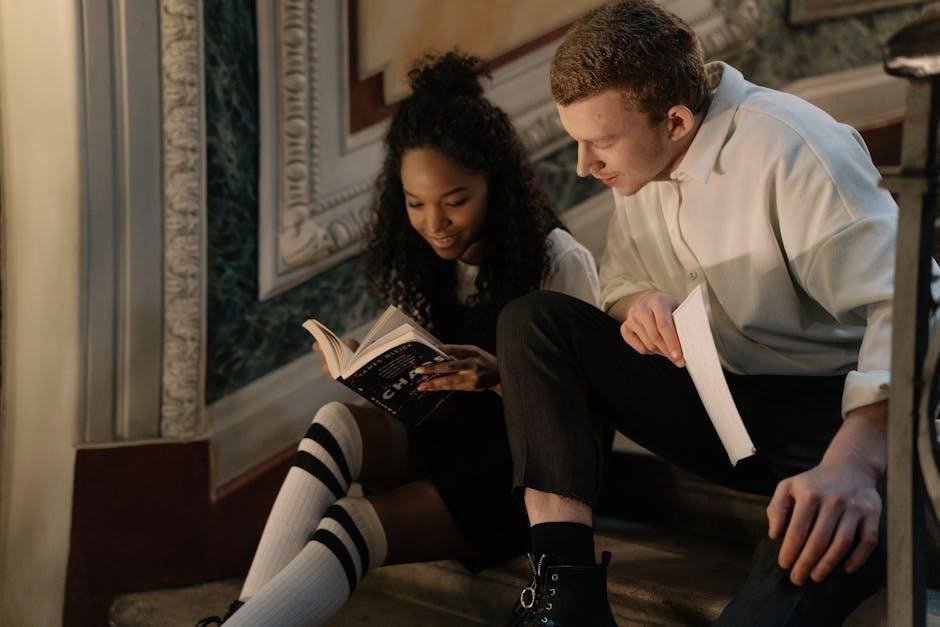
This initial exchange highlights the contrast between Romeo’s idealized, courtly love and the more pragmatic views of his friends. The orchard wall itself symbolizes the barrier between the feuding families, a physical representation of the obstacles Romeo and Juliet face.

The Chorus foreshadows the difficulties ahead, acknowledging the intensity of their love but also the strength of the family hatred. This scene establishes the setting for the pivotal events to unfold, setting the stage for the iconic balcony scene and the lovers’ clandestine meetings.
Scene 2: The Balcony Scene – Initial Exchange
This iconic scene begins with Romeo overhearing Juliet’s soliloquy, expressing her lament over his name – Montague – and the animosity it represents. He responds, revealing himself and initiating a dialogue that quickly transcends mere infatuation.
Their initial exchange is characterized by a questioning of names and identities, suggesting a desire to escape the constraints of their families’ feud. Juliet demonstrates a surprising maturity and agency, challenging the conventional expectations of women in her era.
Romeo’s poetic language and Juliet’s earnest responses establish the depth of their connection. The scene is often staged with Juliet on a balcony, visually emphasizing the distance – and the daring – of their forbidden love. It’s the start of their vows.
Scene 2: The Balcony Scene – Vows of Love
Following their initial exchange, Romeo and Juliet embark on a passionate exchange of vows, solidifying their commitment despite the perilous circumstances. This section showcases Shakespeare’s skill in crafting romantic dialogue, employing metaphors and poetic imagery to convey the intensity of their feelings.
They discuss the practicality of their love, acknowledging the obstacles posed by their families’ hatred. Romeo expresses willingness to risk everything for Juliet, while she cautiously yet resolutely reciprocates his devotion. The famous lines reveal their desperation.
The scene culminates in a promise of marriage, facilitated by Friar Laurence, demonstrating their determination to overcome societal barriers. This act is considered the happiest in the play, focusing on the joy and romance of young love, before tragedy strikes.
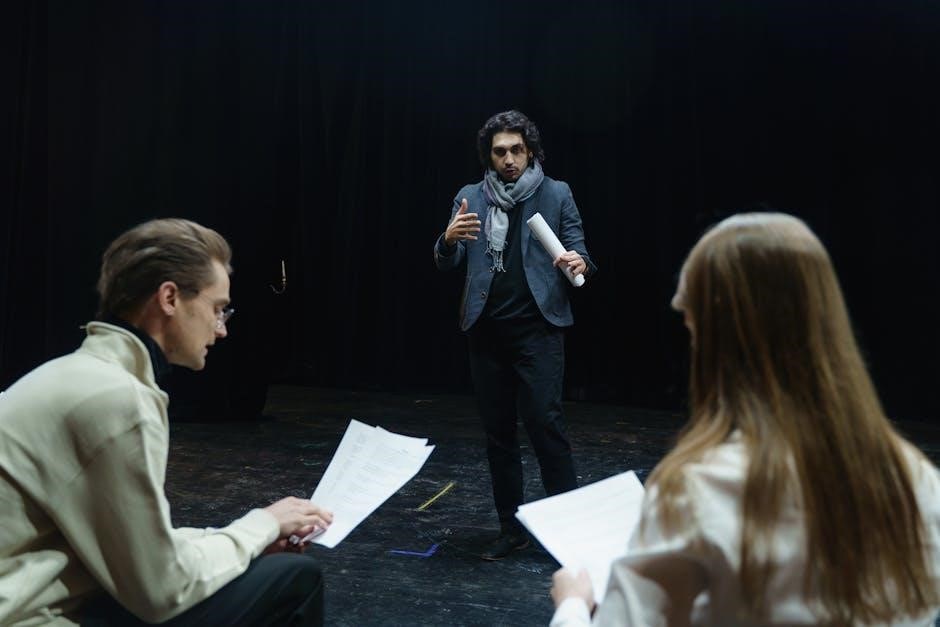
Character Development in Act 2
Act 2 witnesses significant growth in Romeo and Juliet, alongside Friar Laurence’s pivotal role as a confidant and facilitator of their burgeoning love.
Romeo’s Transformation
Initially presented as melancholic and infatuated with Rosaline, Romeo undergoes a dramatic shift in Act 2 with his encounter with Juliet. His language evolves from Petrarchan conceits to a more genuine and passionate expression of love, demonstrating a newfound maturity.
He transitions from a passive, lovesick youth to an active and determined suitor, willing to risk everything – defying his family and social norms – to be with Juliet; This transformation is particularly evident in his impulsive actions and fervent declarations during the balcony scene.
Romeo’s character arc in this act showcases a rapid maturation, fueled by the intensity of his feelings for Juliet, marking a pivotal moment in his journey from adolescent longing to committed love. He embodies youthful passion and courage.
Juliet’s Maturation
Initially portrayed as a naive and obedient daughter, Juliet experiences a remarkable coming-of-age in Act 2. Her encounter with Romeo sparks a rapid intellectual and emotional awakening, challenging her previously held beliefs about love and duty. She demonstrates a surprising boldness and agency, quickly reciprocating Romeo’s affections and taking control of her own destiny.
Juliet’s famous balcony scene reveals a newfound eloquence and self-awareness, as she grapples with the complexities of her forbidden love. She moves beyond societal expectations, questioning the significance of names and family feuds.
This act marks Juliet’s transition from childhood innocence to a woman capable of profound passion and decisive action, foreshadowing her later courage and sacrifice. She embodies youthful determination and blossoming independence.
Friar Laurence’s Role
Friar Laurence emerges as a pivotal figure in Act 2, acting as a confidant to both Romeo and Juliet and a hopeful mediator in their families’ longstanding feud. He agrees to marry the young lovers, believing their union might ultimately reconcile the Montagues and Capulets, driven by a desire to end the violence plaguing Verona;
However, his decision is also tinged with a degree of haste and a reliance on optimistic assumptions. He recognizes the impulsiveness of youthful passion but hopes to harness it for a greater good.
Laurence’s character embodies a blend of wisdom and practicality, offering counsel while simultaneously enabling the lovers’ secret plans. He represents a potential path towards peace, yet his actions also contribute to the escalating tragedy.

Key Literary Devices
Shakespeare skillfully employs dramatic irony, foreshadowing, and striking imagery of light and darkness throughout Act 2, enriching the narrative and heightening emotional impact.
Dramatic Irony
Dramatic irony is powerfully present in Act 2, as the audience is privy to information that the characters are not. We know of Romeo and Juliet’s secret marriage plans, while their families remain locked in bitter conflict, unaware of the union.
This creates a sense of suspense and impending doom, as we anticipate the tragic consequences of their concealed love. For instance, Capulet’s cheerful arrangements for Juliet’s marriage to Paris are laced with irony, knowing her heart already belongs to a Montague.
Friar Laurence’s hope that the marriage will end the feud is also ironic, given the deep-seated hatred that fuels the families’ animosity. Shakespeare uses this technique to emphasize the futility of the conflict and the tragic fate awaiting the lovers, heightening the emotional resonance of the play.
Foreshadowing
Act 2 subtly employs foreshadowing, hinting at the tragic destiny that awaits Romeo and Juliet. The Chorus’s opening lines in Act 2, acknowledging the “death-mark’d love,” immediately signal a grim outcome despite the current joy.
Romeo’s premonitions of a “fatal consequence” if his love is discovered, and Juliet’s anxieties about the hasty nature of their commitment, serve as ominous warnings. The imagery of stars, often associated with fate, is used repeatedly, suggesting their lives are governed by forces beyond their control.
Even Friar Laurence’s cautious words about the potential dangers of their union foreshadow the disastrous events to come. These subtle clues build dramatic tension and prepare the audience for the inevitable tragedy, enhancing the play’s emotional impact and sense of inevitability.
Imagery of Light and Darkness
Shakespeare masterfully utilizes light and darkness imagery throughout Act 2, particularly in the iconic balcony scene, to symbolize the lovers’ relationship and the obstacles they face. Juliet is repeatedly associated with light – she is the sun, a bright jewel – contrasting sharply with the darkness of the night and the secrecy surrounding their love.
This contrast highlights the purity and intensity of their feelings, yet also underscores the danger and forbidden nature of their connection. The darkness represents the feud between their families and the potential for tragedy. Romeo often speaks of Juliet’s beauty illuminating the darkness, emphasizing her transformative power.
The interplay of these opposing images creates a powerful visual and emotional effect, reinforcing the themes of love, hope, and despair that permeate the play.

Language and Style
Shakespeare’s poetic language shines in Act 2, employing rich metaphors, similes, and notably, the sonnet form during the famous balcony exchange.
Shakespearean Sonnet Form (in the Balcony Scene)

The balcony scene masterfully utilizes the Shakespearean sonnet form, specifically a Petrarchan sonnet structure, to mirror the developing intensity and formality of Romeo and Juliet’s love. This isn’t a single, unbroken sonnet, but rather their dialogue is constructed as interwoven sonnet sequences.
Each character contributes lines that, when combined, often complete the rhyme scheme (ABAB CDCD EFEF GG) and thematic concerns of a sonnet. This poetic device elevates their exchange beyond simple conversation, imbuing it with a sense of destiny and artistic beauty. The sonnet form’s inherent structure—the octave presenting a problem or question, and the sestet offering a resolution or reflection—parallels the lovers’ initial uncertainty and their eventual commitment.
Shakespeare’s choice isn’t accidental; it signifies the idealized and elevated nature of their burgeoning affection, transforming a clandestine meeting into a moment of profound poetic expression.
Use of Metaphor and Simile
Shakespeare richly employs metaphor and simile in Act 2, particularly during the balcony scene, to convey the overwhelming and often paradoxical nature of Romeo and Juliet’s love. Juliet is frequently compared to celestial bodies – “the sun,” “bright smoke,” and “a rich jewel in an Ethiope’s ear” – emphasizing her radiant beauty and unattainable status.
Romeo, in turn, uses metaphors of light and darkness to express both the joy and danger of their connection. These comparisons aren’t merely decorative; they reveal the characters’ internal states and the societal obstacles they face. The frequent use of these figures of speech elevates their language, transforming their passionate declarations into poetic artistry.
Similes, like Juliet comparing her love to a “bud,” highlight the newness and fragility of their relationship, while metaphors underscore its depth and transformative power.
Act 2: Significance to the Play’s Overall Arc
Act 2 marks a crucial tonal shift, intensifying the romantic connection while simultaneously building dramatic tension towards the inevitable tragedy unfolding later.
The Shift in Tone
Act 2 represents a distinct departure from the initial hostility dominating Act 1, transitioning into a realm of youthful exuberance and passionate love. Shakespeare deliberately focuses on the “happiest and least tragic act,” immersing the audience in the intoxicating joy experienced by Romeo and Juliet. This isn’t to suggest a complete absence of conflict; the pervasive family feud remains a looming threat, creating a poignant undercurrent of anxiety.
However, the dominant mood is one of optimism and hope, fueled by the couple’s fervent declarations and secret vows. The playful banter and poetic exchanges, particularly within the iconic balcony scene, establish a lighter, more intimate atmosphere. This tonal shift is vital, as it heightens the subsequent tragedy by contrasting the initial bliss with the devastating events to come, making the play’s climax all the more impactful.
Building Dramatic Tension
Despite the prevailing romantic atmosphere, Act 2 masterfully builds dramatic tension through several key elements. The Chorus’s prologue foreshadows the difficulties Romeo and Juliet will face, immediately establishing a sense of impending doom despite their newfound happiness. The lovers’ secret meetings, conducted under the cover of darkness and fraught with the risk of discovery, inherently create suspense.

Friar Laurence’s willingness to marry them, while motivated by a desire to end the feud, adds another layer of complexity and potential danger. The audience is acutely aware of the consequences should their union be revealed. This tension is further amplified by the continued presence of the Montague-Capulet animosity, a constant reminder of the obstacles standing in their way, subtly preparing the audience for the inevitable tragedy that unfolds later in the play.